On the Coarsening of Public Discourse
I spent a couple weeks trying to draft one of my Messages from the Founder about students not reading whole texts in school (or out of school for that matter) and why that matters and what we can do about that, but in the meantime (and I do mean “mean time”) another topic has demanded my attention.
When the President of the United States hurled the F-word toward a heckler and gave him the finger, something broke in me. Didn’t we use to call someone’s noble words “presidential”? What word would I now use to describe someone with virtuous, compelling speech…without rolling my eyes?
We have witnessed this coarsening of public discourse for a while now. Previously, I wrote about a 2023 rally in Iowa where even children were laughing about a vulgar chant about President Biden: “Let’s Go Brandon!”
I realize that what is considered a slur or inappropriate speech does change over time, but I wonder where this linguistic debasement is leading us. And the degradation of speech by the President doesn’t stop there — lies and exaggerations fuel too many lines of his speeches and exhortations.
As summarized in the New York Times on this first anniversary of his second inauguration,
[i]n the first year of his second term, President Trump has cited an arsenal of falsehoods, baseless claims and distortions to justify significant policy changes on the economy, immigration and deployments of the military.
His case for ushering in a turnaround rests on inaccurate superlatives (the “worst inflation” ever under his predecessor and the “best numbers” now under his presidency), mathematically impossible figures (a “600 percent” decline in drug prices) and evidence-free assertions (the decimation of maritime drug smuggling).
Throughout history, people have admired orators who could weave words into stirring phrases — their names and words have lasted centuries and still have the power to make us feel some deep, human emotion. Some of them are carved into our memorials and monuments throughout our nation’s capital. Where are those paragons of language now?
From ancient Roman orators like Cicero to American heroes famous for their way with words, such as Abraham Lincoln, Frederick Douglass, and John F. Kennedy, to British Prime Minister Winston Churchill, to civil rights icons such as Martin Luther King Jr., Nelson Mandela, and Mahatma Gandhi, these eloquent, impassioned wordsmiths and speakers have led us through trials and warfare and urged us to follow our better angels. Their words still occasionally ring memorably in our ears.
But here’s a question: If we want to reclaim rhetoric and the word “presidential,” how would we do that? If our examples from television and radio and podcasts model the opposite, and financially benefit from doing so, how will young people or up-and-coming politicians learn to speak any differently? If swearing and vulgarity and outrageous claims ensure press coverage — and clicks — what will be incentives for the opposite?
Faced with a President who doesn’t use words to comfort the bereaved or to show compassion to the downtrodden or suffering, who will step forward to show how to use words to heal and bring us together as a nation? Have we become so cynical that impassioned speech is now considered suspect and is no longer able to motivate us to greatness?
Does a selfish, me-first attitude really resonate with the majority of people nowadays? Or do good people just keep quiet out of a fear that they will seem Pollyannish or naive?
It takes patience to unpack complex arguments, to follow conversations subtly layered with examples and evidence. Do we have the necessary attention span?
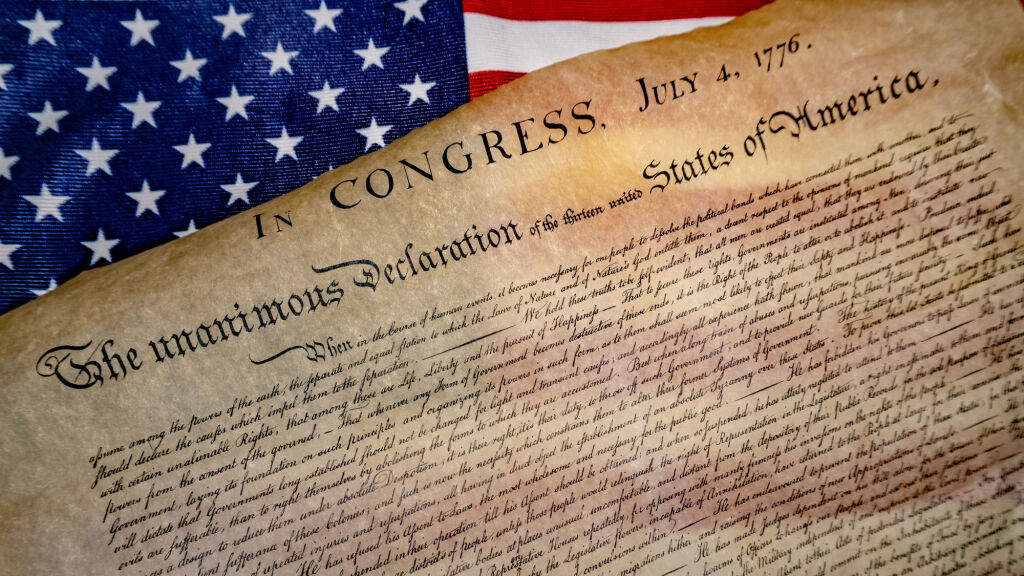
As I write this, it’s just after Martin Luther King Jr.’s birthday. His dream and his challenge changed our country’s history. This July 4, we’ll celebrate the 250th anniversary of the signing of the Declaration of Independence, which contains the “greatest sentence ever written” as proclaimed persuasively in Walter Isaacson’s latest book.
Read their words, and you will see just how powerful words can be and how they can lift us up to accomplish greatness if we let them.
—Ann Friedman, founder of Planet Word